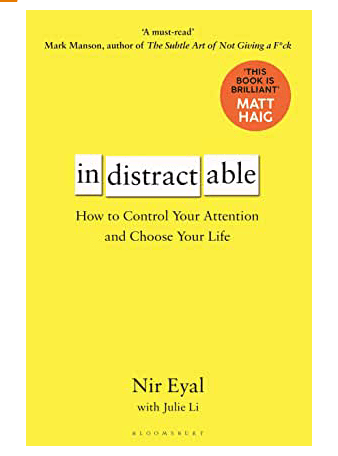
Book Review: Indistractable

This is the new title from Nir Eyal, the author of the well-known ‘Hooked’ which uncovered the research behind how social media (and other tech products) keep their users engaged. This new book took him five years of research and essentially offers advice on staying focused.

The book does a great job of explaining the Human Psychology behind much of what we all experience every day. Nir uses simple terms to cover many academic studies and uses lots of relatable examples.

The essence of the book is down to a neat set of four practices to help avoid distraction. Without going into the detail they deserve, these are:

  • Removing External Triggers – controlling gadgets, environment and people.
  • Controlling Internal Triggers – managing the day and tasks properly.
  • Make Pre-commitments – make pacts to help you stay on task.
  • Make Time – set times for the enjoyable things.

Sweeping insights that get made throughout the book include the proposition that our over-use of technology is actually helping us avoid pain. That might be having specific interactions, honest conversations or trying to work in a dysfunctional culture.

As such busying ourselves with invented tasks (like meetings and email) allow us to do something which looks like progress but often isn’t.

As you’d expect there is a lot about using settings on gadgets and leveraging proper calendar time-boxing to really get things done.

The book clearly focuses on jobs that include a decent amount of solo tasks generating creative output – like writing, programming, or design. That said I don’t think anyone can ignore advice on reducing distraction and this interesting and accessible book is a treat.
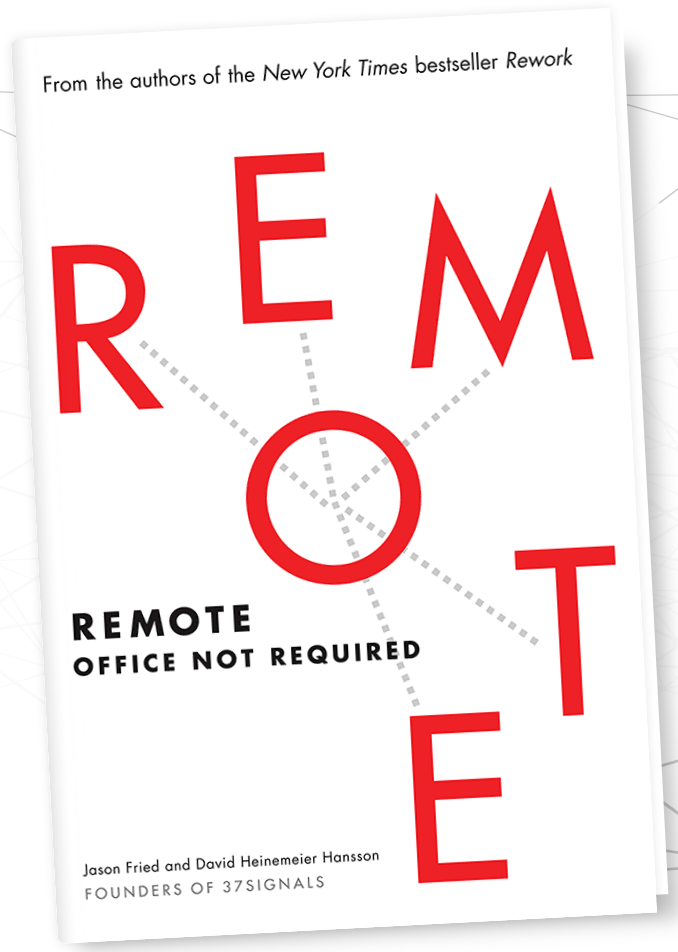
Book Review: Remote – Office Not Required.

Written by the founders of 37 Signals, a US software company, they’ve been using remote staff for years and so had a good amount of experience-based insights to share on the topic.

Generally I found the book focused more on people and companies considering or starting home-working, rather than those already doing it. That said, there are some very good points and tips in there.

Another positive is that the book is broken into 8 chapters, and each one into very short lessons. There are a total of 72 lessons, and each is only a few pages long (in the audio book lesson are 1-4 minutes only). Other books these guys have written are in a similarly digestible format.

Here are a few specific highlights that I found:

  • Some nice statistics and records on the growth of home working.
  • They recommend overlap in timezone for about 4hrs, so opportunity to speak and collaborate is not too narrow and days go by without progress.
  • Interesting insights like office-bound people state they’re “most productive” out of hours – getting in extra early or staying late. When people get together sustained focus drops.
  • Measure performance based on work quality vs time-at-desk. This said, I would add to actually measure time too – because homeworkers regularly put in very long days (and sometimes weekends) to produce the best work – but that’s unsustainable, unhealthy and will end in burnout.
  • Benefits of homeworking includes health, well-being, hobbies, family and friendships. Also benefits to the environment and personal finance.
  • Using cafes (or co-working spaces) and supporting hobbies to resolve challenges including isolation, overwork, health and home distractions.
  • “Great remote workers and just great workers”. It’s not a silver bullet to change an attitude or productivity.
  • Advice on working with customers/clients from a remote location.
  • Advice on hiring remote staff.
  • A few communication tips (via writing) when in person nuance is eliminated.
  • Recommended technology tools and resources, although a little outdated now.

So overall I liked the book, and on this topic it’s one of the better resources out there. I’ll endeavor to review more going forwards and compare.