Artificial Intelligence (AI) is starting to seep into everyday life, and as such let’s try to extrapolate the potential impact on home-work.
Guidance. AI looks at large volumes of varying data and uses algorithms to determine something resembling meaning. Think of this like reporting-on-steroids. This means insights and decision support is not a few clicks-away or must garnered from a chart, it will get built-into the business process directly. As such, the tasks at hand are pre-crafted by a system which has already calculated the best action to take based on the data available.
Autonomy. Using the same theory as above, some tasks will be so obviously the right ones that they are automatically taken, without the need for human intervention at all. This works fine for rule-based work decisions with little or no room for exceptions.
Setup. Work resources and tools will become richer and more immersive. More Video and Virtual Reality will allow you to visualise the work, interacting with remote environments.
Keyboards might finally bite the dust. Verbal commands and gesture interfaces might fit many work tasks. Ask system questions and to model scenarios based on auto-collected big data (e.g. would my customers like x or y). Hold conversations with the systems that has the raw data – turning it into insights and knowledge and issuing the appropriate actions.
Work Assignment. Maybe clever machines can dissect jobs into specialist fine grained tasks, and assign these out based on worker profiles – their past history and validated abilities). This means workers focus is narrow but deep and helps cross-pollinate skills over multiple projects or even employers. Basically this becomes work-as a-service.
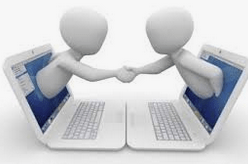
No more offices – but a virtual office. You appear as avatar and work like you would surrounded by colleagues – their avatars. Means no loss of social, cultural and personal engagement. It means you Can be “in” more then one virtual office at once, to collaborate with any colleague anywhere. Everyone is just a virtual tap on the shoulder away.
Less Stuff. Everything you need will be in the cloud. Soon you will not have a need to maintain your own office setup as everything will be done online. You’ll only need an interface – probably a camera based system which permits body interactions: speech commands, gestures, body language nuance and so on. Obviously will need to see as well, so some kind of holographic projection system or output like glasses or headset (once they’ve fixed the VR nausea problem).
Ideation. Even ideas could be auto-validated by intelligent systems which can run virtual tests and builds to see if something might practically work out. Eg architecture or chemistry.
General Assistant. Imagine if your automated assistant is also watching too, looking for body queues like frustration and enjoyment, and feeding you alternative perspectives. Using intent and sentiment analysis during a meeting – against all participants, they could capture key points that you might have missed. An assistant might scan and analyse the whole thing, giving a post-meeting summary.
Meeting modelling. This same scanned data could also “model” the interactions and allow you to test how things could pan out. Indeed if everyone’s online profile (work tracking profile) was available then a picture could be modelled of participants. This could give pointers as to who might be best placed to be involve and how best to handle certain folks based on their historical interaction activity.
Profiled. As you as a worker will get tracked more, just like in social media. Everything you do will get recorded: Work assignments, projects, performance data, even your communications. As such your true value can be calculated, plus points for improvement (or recognition) identified. No more passive aggressive email!
EQ Roles. As machines focus on supplementing IQ efforts, human emotion-based contribution might be a opportunity area.
Total Independence. The ‘Employee’ as a concept goes outdated. Everyone is a subcontractor with compensation benefits auto-processed based on performance and deliverables – some of which are machine measured. As data collection develops what we do can be monitored, evaluated and rewarded very discretely. If you’re good, the sky is the limit, not that set by your single employer.
Conclusion. While it sounds very big brother, there are certainly advantages coming and it will be fun to see what comes first. Got ideas, please comment.







 Working From Home